Abuse and Neglect in Nursing Homes and AFC Facilities

Yann Cazavet • July 19, 2025

Why Tanglewood is the right choice


Nursing home and AFC (Adult Foster Care) facility abuse and neglect have sadly become a widespread crisis across the country. Too many families have placed their trust in large-scale facilities, only to find their loved ones neglected, mistreated, or worse. The sad truth is that institutional shortcomings — especially staff shortages, management failures, and refusal to take accountability — have created unsafe, impersonal environments. But there is hope. Facilities like Tanglewood Assisted Living Facility in Fenton, MI prove that elder care can and should be personal, attentive, and rooted in dignity.


The Hidden Impact of Staff Shortages

According to a study by the American Health Care Association (AHCA), 99% of nursing homes in the U.S. report having staff vacancies, while 94% struggle to recruit qualified caregivers. More than 70% report fewer staff now than before the COVID-19 pandemic. These alarming numbers have a very real impact on care quality. Facilities overburdened by staff shortages are often forced to hire underqualified or improperly vetted individuals. These employees may not be prepared for the emotional and physical demands of caring for vulnerable elders.

Big-box facilities simply cannot maintain high standards of care when staffing levels are insufficient. Inadequate training, exhaustion, and burnout lead to mistakes, neglect, and even abuse. But this is not the case at Tanglewood Assisted Living Facility in Fenton, MI, where a consistent, experienced team ensures individualized care for every resident.

At Tanglewood Assisted Living Facility in Fenton, MI, staffing is never an afterthought. With 12 staff members, 1 manager, 1 assistant manager, and the owner regularly on-site, residents receive the care and attention they deserve. At least two staff members are always present, providing peace of mind for families and safety for every resident.


The Problem of Management Failures in Large Facilities

Beyond staffing, many facilities are plagued by systemic failures in management. Instead of addressing clear problems, some nursing homes focus on cutting costs and maximizing admissions. They often ignore routine safety hazards, overlook staff misconduct, and fail to create an environment where residents feel safe and cared for.

In large institutions, a resident becomes just another name on a clipboard. But at Tanglewood Assisted Living Facility in Fenton, MI, that couldn’t be further from the truth. Each individual is treated like family, known by their first name, their life story, and their relatives. Tanglewood has upheld this personal care philosophy for over 30 years, proving that small-scale, hands-on care is not only possible — it’s sustainable.


Accountability Is Non-Negotiable

In far too many facilities, even when abuse or neglect is reported, leadership fails to act. Complaints from families and residents are ignored until tragedy forces public attention. This kind of neglect is unacceptable. When facilities refuse to take responsibility, they are complicit in ongoing harm.

That’s why Tanglewood Assisted Living Facility in Fenton, MI stands out as a model of transparency and responsibility. Accountability is embedded in every aspect of the facility’s operations. With the owner actively involved in daily care, oversight is built in. Leadership at Tanglewood doesn’t wait for problems to escalate — they prevent them from happening in the first place.


Customized, Compassionate Care — Not Just a Slogan

At large, profit-driven facilities, residents can often feel lost in the crowd. But at Tanglewood Assisted Living Facility in Fenton, MI, residents are never just a number. They are known, loved, and respected. The intimate, home-like setting allows for customized care, regular interaction, and deep relationships that simply cannot be replicated in massive, understaffed institutions.

Tanglewood provides a level of personalized care and emotional connection that is impossible to deliver in big facilities where policies take precedence over people. Whether it’s a simple conversation, a special dietary need, or a family visit — Tanglewood Assisted Living Facility in Fenton, MI ensures it’s handled with compassion and dignity.


The Choice Is Clear

As families navigate the difficult decision of choosing care for a loved one, they must ask: Do I want my parent to be cared for in a crowded, chaotic facility — or in a loving, attentive home where they are truly known?

The facts speak for themselves:

  • Big facilities suffer from crippling staff shortages
  • Management often fails to maintain safe environments
  • Many institutions refuse to accept accountability for failures


But there is another way. Tanglewood Assisted Living Facility in Fenton, MI has proven that elder care can be personal, safe, and rooted in decades of trust. With consistent staffing, engaged leadership, and a deep commitment to each resident, Tanglewood is a haven from the systemic problems plaguing larger facilities.

If you're looking for a place where your loved one is treated not just as a resident, but as a cherished member of a family, Tanglewood Assisted Living Facility in Fenton, MI is the clear choice.


By Yann Cazavet December 21, 2025
It is Time
By Yann Cazavet November 25, 2025
Why Families in Fenton, Michigan Choose Tanglewood Assisted Living Facility for Their Loved Ones
By Yann Cazavet October 26, 2025
The Critical Importance of Boutique Assisted Living
By Yann Cazavet September 12, 2025
Your Complete FAQ Guide to Assisted Living in Fenton, Michigan
By Yann Cazavet July 19, 2025
New Title
By Yann Cazavet June 9, 2025
The Therapeutic Power of Wildlife and Gardens
By Yann Cazavet April 18, 2025
What Makes a Great Memory Care Facility?
An older woman holding a cellphone with a younger woman leaning over her shoulder.
February 6, 2025
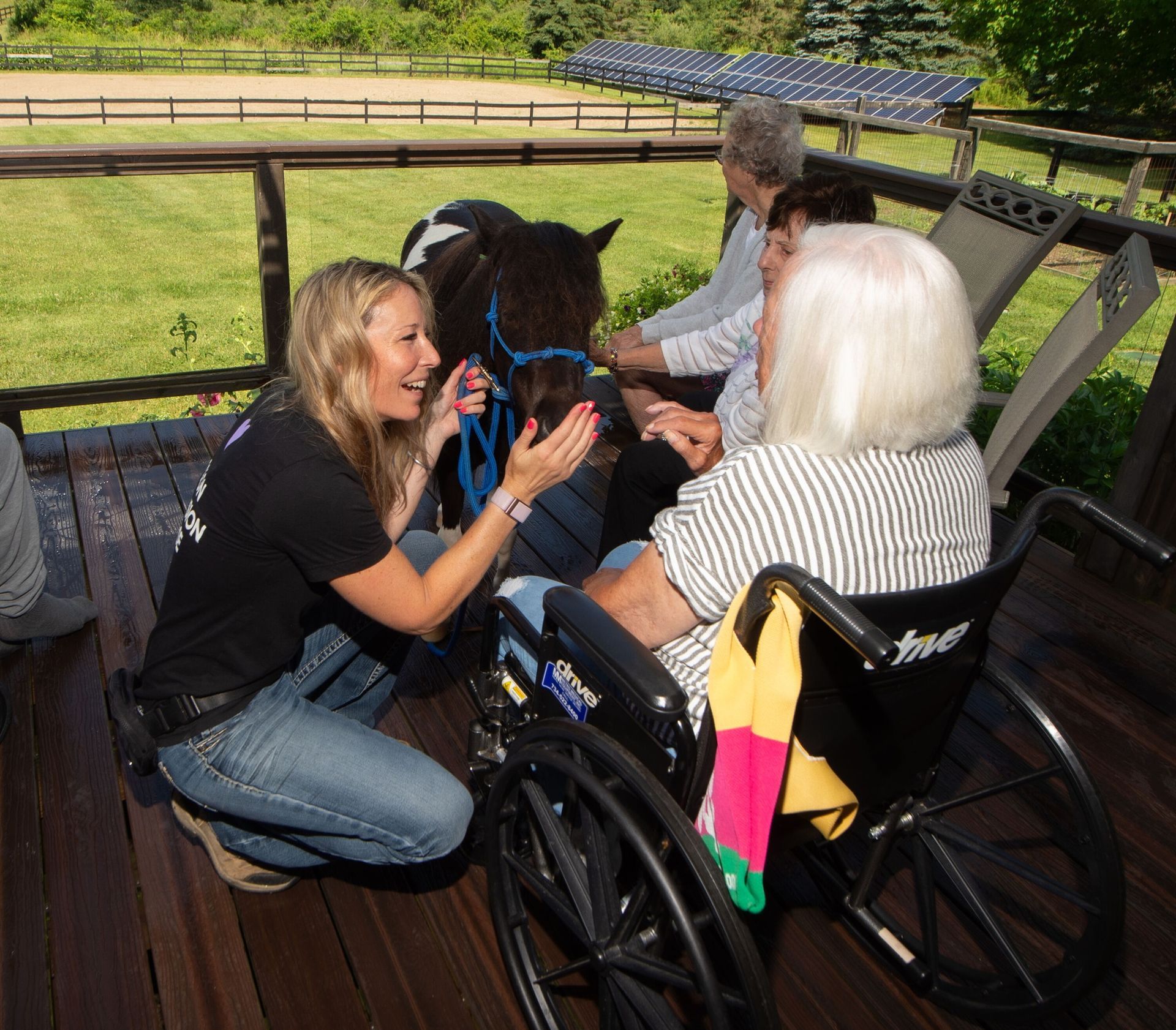
At Tanglewood Assisted Living, we practice the five foot rule with memory loss patients. If you wish to be understood by a memory loss patient, you should be within five feet of that person when you speak to them. Most memory loss patients simply cannot process words that are shouted at them from across the room. In order to communicate effectively you should get close, make eye contact and begin by using the person’s first name. If the patient is sitting down, you should not stand over them and talk down to them. When you stand up, you assume a dominate posture which makes people feel uncomfortable. Instead, kneel down so you are at the same eye level as the patient and you will immediately put them at ease. Touch is important to memory loss patients. While you’re speaking, hold their hand or put your hand on their arm or shoulder. Be generous with hugs and handshakes. At Tanglewood, the staff is trained repeatedly to maintain a calm and pleasant tone of voice. Memory loss patients have not lost their ability to appreciate tone of voice and if you become upset you will only make a bad situation worse. Some patients will be depressed or mad at the world. With these you should commiserate. Offer compassion, sympathy and condolences. Other patients may be mad at you. They may accuse you of all sorts of atrocities. With these folks you should simply apologize and say you’ll try to do better. You should never get mad. Always remain calm and pleasant. If you do feel yourself becoming upset, walk away. Make sure the patient is safe and walk away. Come back in ten minutes and the patient’s attitude will have changed completely. Ask only simple questions of a memory loss patient - questions which require a yes or no answer. Don’t ask “would you like lemonade or ice tea?” Even such mildly complex questions generate confusion. Ask only yes or no questions. The best chance of having a coherent conversation with a middle or late stage memory loss patient is to talk about events that happened long ago. Such very old memories usually remain intact and the memory loss patient will feel comfortable talking about them. If possible, bring photographs from the patient’s younger days and talk about the people and places in the pictures. Finally, musical memories also remain intact. A patient will remember and enjoy the lyrics and melodies of music they’ve heard throughout their lives and especially music they heard as a child. They will usually enjoy and sing along with hymns and pop music songs they heard in their youth.
A woman is sitting on a bench in a park next to an elderly man in a wheelchair.
February 6, 2025
Unfortunately, almost all memory loss patients will become incontinent. At first they will have an occasional accident but eventually they will forget when and how to use the bathroom and will need to wear an undergarment all the time. While nothing can prevent this from happening, there are some techniques which can delay incontinence and cut down on the number of accidents. Prompting: Accidents often occur because the memory loss patient simply waited too long before heading for the bathroom. If a caregiver will prompt the patient every two to three hours, by asking if they need to use the bathroom, the number of accidents can be reduced significantly. If the memory loss patient continually says they don’t need to use the bathroom, the caregiver should respond with “let’s give it a try” and help the patient to the bathroom. By the time you get to the bathroom, the memory loss patient may suddenly realize they have to go. An old trick which may help is to sit the patient on the toilet and run water. Bedside Commodes: Many accident happen at night. Often a sleepy resident will have trouble getting to the bathroom in time. Putting a portable commode next to the bed and keeping a night light in the room will help this situation. Washable Protective Pads: An incontinent patient can damage or destroy furniture, mattresses and carpeting. A caregiver may have to remove and wash bed linen every morning. Even the best undergarments are subject to leaks. If you have a loved one in the house who suffers with incontinence, you should cover your furniture with washable protective pads, often called “chuck” pads. Chuck pads should be used to cover furniture and mattresses. Even mattresses with waterproof mattress pads should also have an extra large chuck pad underneath. These pads are now available in a variety of colors to match the furniture. Undergarments: Some undergarments pull up and down like underwear and are useful in the early stages of incontinence when the patient still uses the bathroom by themselves and the undergarment is mainly to protect against accidents. To change this type of undergarment however, the caregiver must remove the patients shoes and pants to put on a new undergarment. This inconvenience can be avoided by using briefs which are secured on the sides with elastic bands and buttons. These can be changed without removing the patient’s pants.
One older man and one younger man sitting together at a table looking at a laptop.
February 6, 2025
Memory loss in the elderly, whether brought on by Alzheimer’s disease or some other cause, is a progressive condition, becoming worse over time. At some point in the progression of this condition an elderly patient will lose the ability to make rational decisions and someone else, usually an adult child, will have to take over responsibility for making medical and financial decisions on behalf of the memory loss patient. For this change to take place legally, quickly and inexpensively, two important documents must be signed by the elderly patient while they are still competent to make legal decisions. Medical Durable Power of Attorney A Medical Durable Power of Attorney (MDPA) is a legal document appointing someone else to speak for a patient regarding medical decisions, in the event the patient cannot speak for themselves. The document specifically names an individual, plus one or two alternates, to take charge of medical care. The document also allows a patient to specify certain types of treatment they do or do not want in the event the patient cannot speak for themselves and will not recover from their illness. Ideally, this document should be signed long before someone develops memory loss. If an elderly patient is diagnosed with memory loss and does not have a MDPA in place, the patient may still have time to sign a MDPA. Most elderly patients in the very early stages of memory loss, are still quite independent and rational and would still be considered legally competent to sign legal documents. This fact affords the memory loss patient an opportunity to execute and sign a MDPA even after being diagnosed. Once a memory loss diagnosis is made, the elderly patient and their family need to move quickly to have a MDPA executed, before the elderly patient’s competency to sign legal docments become questionable. Memory loss can progress quite rapidly in some patients and dramatic changes in abilities can occur almost overnight. The family of a patient with memory loss will be called upon to make difficult choices regarding medical care. One such choice occurs frequently with late-stage memory loss patients and provides a good example of the importance of an MDPA. Near the end of life, many memory loss patients stop eating. A patient may be hand-fed for a time but eventually the patient stops swallowing and any further attempts at hand-feeding will cause aspiration or choking. At this point the family must decide whether to connect their parent to a feeding tube or allow their loved one to pass away. With an MDPA in place, the family will not have to guess how their parent felt about such a difficult decision. The MDPA will state specifically whether the patient does or does not want such life-prolonging medical care. The MDPA accomplishes many objectives. It makes the transition of responsibility for medical decisions smooth and inexpensive, avoiding the possibility of costly and time-consuming court hearings. It allows the elderly parent to set forth in detail the type of medical treatment they do or do not wish to receive in the event they are terminally ill and cannot speak for themselves. It relieves the adult children of the burden and uncertainty of trying to guess how the parent felt about life-prolonging medical treatment. It allows the patient advocate to execute a Do-Not-Resuscitate Order to make certain the facility caring for their parent follows their parent’s wishes regarding life-prolonging medical treatment. General Durable Power of Attorney Similar to a Medical Durable Power of Attorney, a General Durable Power of Attorney (GDPA) appoints someone to act on behalf of the memory loss patient for financial and property decisions. (If the memory loss patient has a trust, the language of the trust may have the same effect as the GDPA, giving authority to a successor trustee to handle financial affairs when the memory loss patient can no longer handle such matters.) Without a GDPA (or the equivalent language in a trust,) a court hearing will be required to appoint and empower a conservator who will handle financial and property affairs for the memory loss patient. Such court hearings can be expensive. Both the Medical Durable Power of Attorney and the General Durable Power of Attorney are critical legal documents. They give effect to the wishes of the people involved and they avoid the expense and uncertainty of probate court oversight.